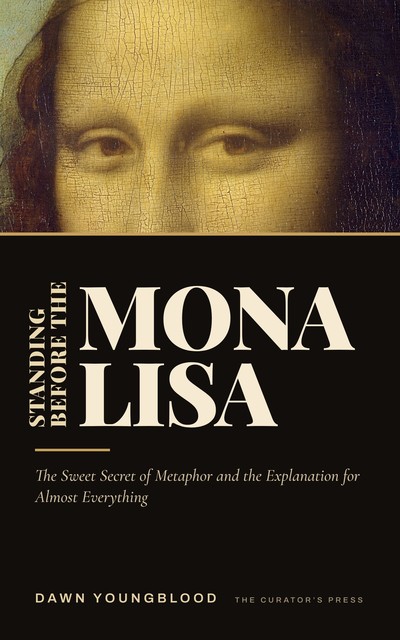
Standing Before the Mona Lisa
The Sweet Secret of Metaphor and the Explanation for Almost Everything
Buy on AmazonA stranger in the Louvre stopped an archaeologist with a single question: “Where is Mona Lisa?”
Hundreds of people stand pressed together before twenty-one by thirty inches of painted poplar, phones raised, voices dropped to a hush. On the far wall hangs the largest painting in the museum, Veronese’s Wedding Feast at Cana, and almost no one turns to look. It feels almost like worship. Why her?
Dawn Youngblood carries that question out of the Louvre and follows it across the world: to the gods of Egypt and Babylon, the masks cultures built to hold a face against death, the lion and the eagle and the dove, sacred mountains and the rivers that descend from them, the sun and moon and stars, a stadium screaming for four young men from Liverpool, and the human brain itself. Every trail ends at the same habit of mind: metaphor, the reach toward something the eye can see, to hold what can be held no other way.
Along the way she reopens the strangest fact in the painting’s documented history. The Florentine silk merchant who commissioned his wife’s portrait never received it. Leonardo kept her for sixteen years, carried her across the Alps, and still had her when he died.
Inside:
- Why cultures that never met arrived at the same masks, gods, and symbols
- What a brain scanner shows when you hear “he kicked the habit”
- How Liberty, Justice, and Alma Mater became women with torches, scales, and books
- Why the church fathers read Genesis figuratively centuries before Darwin
- The Maker question: what a mind built from metaphor suggests about who built it
- The strongest case against the book’s own thesis, answered in full
A book about why one small portrait holds the world’s gaze, and about the oldest habit of the human mind.